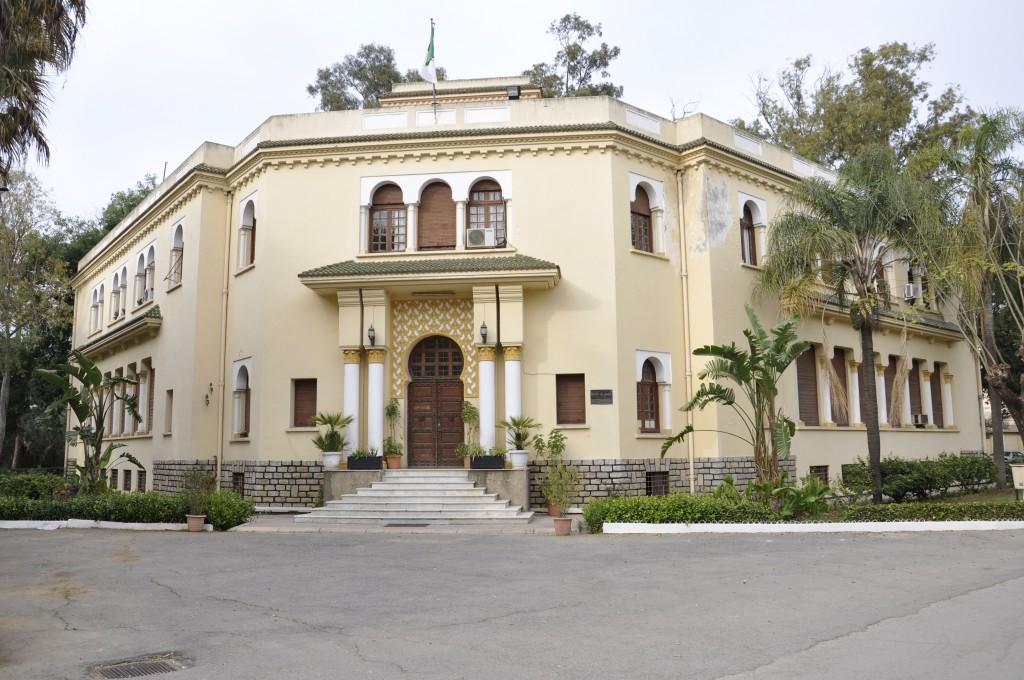
FIRST SCHOOL OF AGRICULTURE AND VITICULTURE IN ALGERIA
At the start of French colonization, from 1931, Swiss emigration
began to settle in Algeria, mainly in the center of the country by
creation of the Swiss hamlets of Koléa (Coleah) and in the east of the country in Sétif.
Despite difficult conditions due to lack of infrastructure, some
men have faced adversity thanks to their tenacity and will.
This is the case of Jean Nicolas Décaillet, originally from Valais, who inherited the knowledge
of his relatives to develop subsistence crops (potatoes,
beans, etc.), practice cattle breeding, in particular, and especially for
produce cereals.
In 1881, he brought to fruition a project that was close to his heart: the creation of the first
“Practical school of agriculture and viticulture” located on its estate,
Rouiba (about 25 km from Algiers), aided by the State.
Appointed director of this school, he undertook to provide education to the
both theoretical and practical. He succeeded in giving him a reputation both in
Algeria, France and even other countries.
This Valais native received the title of “Commander of Agricultural Merit” thanks to
to honorable results obtained through stubborn and lasting work.
Benefiting from the technical progress of the time, he introduced a program of
bold and efficient training.
Over the years, he was one of the first agricultural experts in the Mitidja plain.
(about sixty km from Algiers) to develop and select seeds.
This is how he used modern equipment and trained a workforce
highly specialized and qualified.
This school will undergo a change to take the name of School of Agriculture
Algerian, in 1905, from the National Agronomic Institute, in 1968.to become
National Higher Agronomic School. in 2008. Finally, two schools
higher education institutions in Saharan agriculture, in Adrar and El Oued will see the light of day in
2021.